


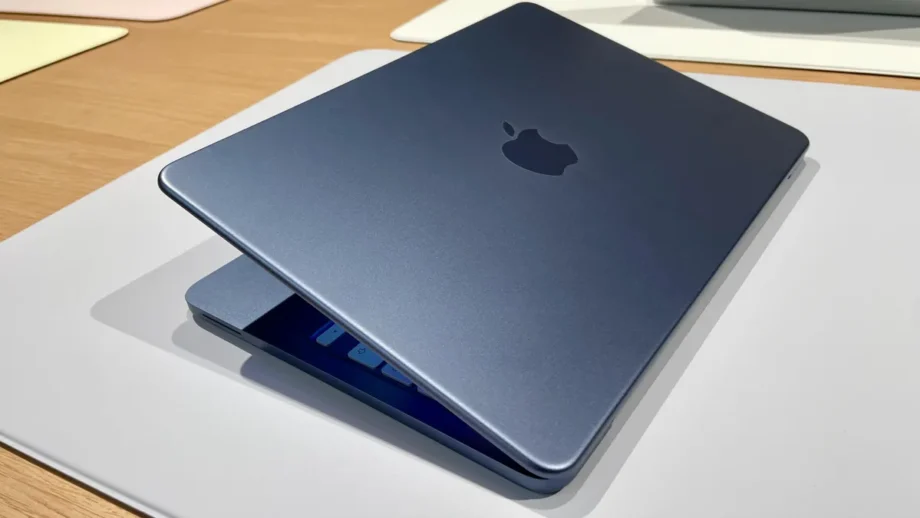
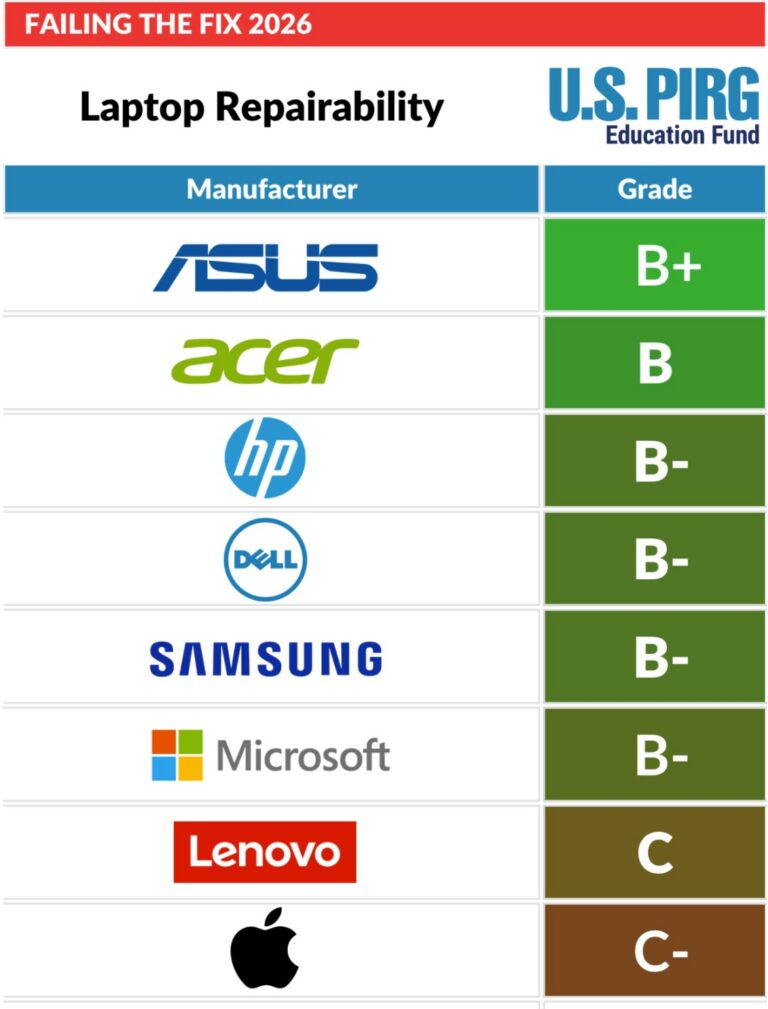
Apple has once again earned the lowest grades in the Public Interest Research Group (PIRG) Education Fund’s annual “Failing the Fix” report. The 2026 analysis, which evaluates ease of disassembly and access to repair data, issued Apple a C-minus for laptops and a D-minus for smartphones.
How the Grades Are Calculated
PIRG bases its laptop scores on the French Repairability Index, which mandates transparency for products sold in France. To better reflect consumer expectations, PIRG heavily weights “physical ease of disassembly.” Scores are also impacted by:
- Documentation & Parts: Availability of manuals and affordable spare parts.
- The “Lobbying Penalty”: Most vendors lost points for funding trade groups (like TechNet or the CTA) that oppose Right to Repair legislation.
- Legislative Support: Manufacturers can gain points by testifying in favor of repair laws.
The “Repairability Losers”: Apple and Lenovo
Apple sits at the bottom of the laptop list, primarily due to poor disassembly scores. Lenovo followed closely with a C-minus, hampered by a recurring failure to provide required repair documentation. Despite Lenovo claiming a “backend web issue” caused similar failures in 2025, PIRG noted that the company still hasn’t achieved full compliance a year later.
The Smartphone Shift: EPREL Standards
For mobile devices, PIRG transitioned to the European Product Registry for Energy Labelling (EPREL) criteria. Under these new 2026 rules:
- Apple and Samsung scored poorly, largely because they only guarantee software updates for five years.
- Parts Pairing: While Apple made strides with its Repair Assistant, advocates warn that extending “Activation Locks” to individual parts could “strand” functional components, making them impossible to reuse.
Signs of Progress
Despite the stagnant scores, PIRG director Nathan Proctor noted that access to tools and information is improving. He specifically praised more repair-friendly designs like the MacBook Neo as a step in the right direction, even as the industry struggles with “parts pairing” and software-locked components.
